HOW ESUS (Hesus) of the Celts BECAME JESUS IN HOLY SCRIPTURE!
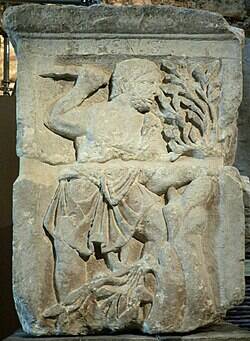
THE GREEK GOD ESUS HAS NO CONNECTION, OR ASSOCIATION WITH THE TRUTH OF THE HOLY SCRIPTURES, OR THE HOLY KINGDOM; WHICH HAS ALWAYS BEEN LOCATED IN SOUTH AFRICA; YET THIS MAN-MADE CREATION IS WORSHIPPED THROUGH-OUT THE EARTH!
ESUS was FIRST worshipped by greeks
EUROPEANS AND ESUS CAME TO AFRICA FOR THIS REASON -
"TO sTEAL, KILL, AND destroy."
THE THIEF COMETH NOT BUT FOR TO STEAL, KILL, AND DESTROY: JOHN 10:10
"BELIEVING THE JESUS LIE IS A dangerous VIOLATION OF THE FIRST COMMANDMENT EXODUS 20:3-5 "
And SoNINI NaNINI spoke all these words, saying,
I am the almighty your Creator, which have brought you out of the land of Egypt, out of the house of bondage.
You shalt have no other gods before me.
You shalt not make unto yourself any graven image, or any likeness of anything that is in heaven above, or that is in the earth beneath, or that is in the water under the earth:
you shalt not bow down yourself to them, nor serve them: for I the Creator your mighty-one am a jealous God, visiting the iniquity of the fathers upon the children unto the third and fourth generation of them that hate me;
No one by the name of JESUS was ever born in Bethlehem South Africa. Nor did this Devil by the name Jesus ever do any of the things they inserted in our script. He did not die or rise for anyone's SINS, and he will not be coming back for anyone!
ORGIN OF THE JESUS DECEPTION INTRODUCED IN REV 12:9
And the great dragon was cast out, that old serpent, called the Devil, and Satan,
which deceives the whole world: he was cast out into the earth,
and his angels were cast out with him. REV 12:9
DECEPTION FOLLOW-UP - FROM ISAIAH 14;12-14
JESUS CHRIST IS THE PRINCIPALITY WHO FULFILS ISAIAH 14:12-14 / "I WILL BE LIKE THE ALMIGHTY"
How art thou fallen from heaven, O Lucifer, son of the morning! how art thou cut down to the ground, which didst weaken the nations! For thou hast said in thine heart, I will ascend into heaven, I will exalt my throne above the stars of God: I will sit also upon the mount of the congregation, in the sides of the north: I will ascend above the heights of the clouds; I will be like the Highest. Yet thou shalt be brought down to hell, to the sides of the pit. Isa 14:12 -14
ACCORDING TO APOSTLE PAUL THE EUROPEANS / gentiles WORSHIPPED DEVILS
"THE APOSTLE PAUL, LIKE ALL OUR PROPHETS LIVED ON THE AFRICAN CONTINENT"
TESTIMONY OF THE APOSTLE PAUL IN THE RE-NEWED COVENANT
Speaks about and concerning the chosen people while still in Sub Saharan Africa, and their mingling with the Europeans who worshiped these other gods, one being Esus. But I say that the things which the Gentiles sacrifice, they sacrifice to devils, and not to God: and I would not that ye should have fellowship with devils. You cannot drink the cup of the Lord, and the cup of devils: ye cannot be partakers of the Lord's table, and of the table of devils. I Cor 10:20 - 21
Esus (Hesus) of the Celts
Esus, also spelled Hesus in some Gaulish inscriptions, was a Celtic deity known from Roman literary sources, inscriptions, and iconography. He is most often mentioned alongside Taranis (“Thunderer”) and Teutates (“God of the People”) in the 1st-century CE poet Lucan’s Pharsalia, where they were said to receive human sacrifices Wikipedia+1.
"FOR THE LAST 400 YEARS: AFRICANS AND THE DIASPORA HAVE NOT WORSHIPPED THE TRUE CREATOR, BUT HAVE WORSHIPPED OTHER GODS"
And the almighty Creator shall scatter you among all people, from the one end of the earth even unto the other, and there you shalt serve other gods, which neither you nor your fathers have known, even wood and stone.
Trans-Atlantic Save Trade Deu 28:6
"THE LETTER "J" WAS ADDED TO THE NAME ESUS IN THE SEVENTENTH CENTURY"
Identity and Associations
- Name meaning: The name Esusis thought to mean “Lord” or “Master” from the Proto-Indo-European root *h₁eis- (“to be reverent, to worship”), cognate with Italic aisos (“god”) Wikipedia. Some etymologies link it to esu-, meaning “good” Wikipedia.
- Roman identification: Esus was identified with the Roman god Mercury (Hermes) in some sources com.
- Mythological depictions: Iconography shows Esus as a bent woodman cutting or pruning a tree, often with a bulland three cranes (or egrets), a motif also seen with his companion Tarvos Trigaranos Wikipedia+1. This imagery may symbolize vegetation, fertility, or ritual sacrifice.
- Marriage: In some traditions, Esus was married to the goddess Rosmertacom.
Worship and Rituals
- Sacrificial practices: Scholia to Lucan describe Esus’s victims as being suspended from a tree and dismembered Wikipedia+1. This violent ritual has been compared to mythic figures like the Lindow Man and to Germanic and Welsh traditions of tree-sacrifice.
- Ritual symbols: The Celtic cross, mistletoe, and oak were sacred; candles, incense, and sacred water were used in worship Werdsmith.
- Druidic role: In some mythic reconstructions, Esus was a Druid sun savior, associated with the sun deity “Gudt” and linked to healing, vegetation, and reincarnation Werdsmith.
Geographic and Temporal Scope
- Worship was attested in Gaul, Noricum, and possibly Roman North Africa; personal names suggest possible presence in Britain Wikipedia.
- Inscriptions date from at least the 1st century BCE, with Latin literary references as late as the 5th century CEWikipedia.
Etymology and Name Variants
- Variants include Hesus and Esunertus (“strong Esus”) Academy for Ancient Texts.
- The shift from Hesusto Jesus in Christian tradition is a later development, occurring only after the introduction of the letter “J” in the 17th century Werdsmith.
In summary, Esus/Hesus was a complex Celtic deity linked to vegetation, sacrifice, and possibly the sun, with strong associations to Mercury in Roman religion. His depictions, rituals, and name variants reflect both indigenous Celtic beliefs and later Greco-Roman syncretism.
Overview
Esus is a Celtic god known from iconographic, epigraphic, and literary sources. The 1st-century CE Roman poet Lucan's epic Pharsalia mentions Esus, Taranis, and Teutates as gods to whom the Gauls …
Etymology
A large number of etymologies have been proposed for the name "Esus". The nature of the god's name is not certain. Wolfgang Meid [de] has suggested it may be a euphemism, cover-name, or epithet of the god. Claude Sterckx [fr] has even
We do know for certain the letter "J" was added to the name esus in the 1600's at the time of the slave trade, which established the name we know today as "JESUS" which is now being used to deceive the world.
conclusion
But the fearful, and unbelieving, and the abominable, and murderers, and whoremongers, and sorcerers, and idolaters, and all liars, shall have their part in the lake which burn with fire and brimstone: which is the second death.